Fire risk assessment for blocks of flats
For freeholders, managing agents, right to manage companies and housing providers.
- Written report to keep on file
- Clear action plan, highest risk first
- Price agreed before booking
If a fire starts in one flat tonight, what happens to everyone else in the block? That is the question a fire risk assessment for a block of flats has to answer, and the stay put notice in the lobby only makes sense if the answer is a good one.
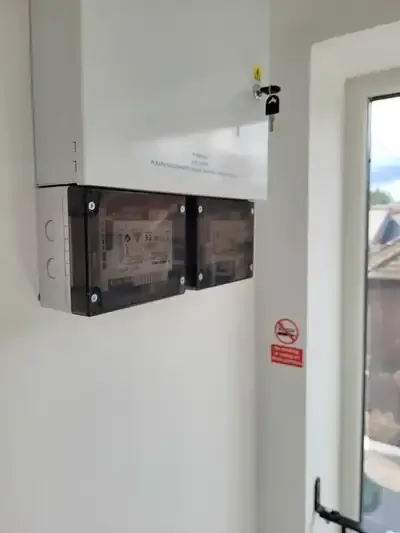
What is covered
The Fire Safety Order applies to the parts residents share: lobbies, stairs, corridors, plant and meter rooms, bin stores, roof access. The Fire Safety Act 2021 made clear that it also covers the building's structure, external walls including balconies and windows, and the front doors of the flats.
Which type
Fire safety in purpose-built blocks of flats, a guide published on gov.uk, describes four types. A Type 1 looks at the common parts and opens nothing up, though it still includes a sample of flat front doors. The guide says that is normally enough for most purpose-built blocks. A Type 2 adds destructive checks in the common parts, such as lifting a ceiling tile. A Type 3 looks inside a sample of flats without opening anything. A Type 4 adds destructive checks in the flats too.
Height changes the duties
The Fire Safety (England) Regulations 2022 apply to blocks with two or more sets of flats. Above 11 metres, communal fire doors must be checked every three months and flat front doors every year, on a best endeavours basis. At 18 metres or seven storeys and up, there is a secure information box, wayfinding signs, floor plans for the fire service and monthly checks on firefighting lifts and equipment. Our assessor will tell you which band your block is in.
Lines you might see in the plan
Made-up examples, from a seven-storey block:
Ground floor lobby. Pram and two bikes stored under the stair. Remove and tell residents in writing. Within one week.
Floor 5. Corridor smoke vent did not open on test. Repair and record the next test. Do now.
Flat front doors. Four of the twelve sampled have had their closers removed. Write to leaseholders and arrange refitting. Within one month.
Send the postcode, what the building is used for and how many floors it has. We reply with a written price.