What a fire risk assessment report contains
How to tell a useful report from a template with your address on it.
- Written report to keep on file
- Clear action plan, highest risk first
- Price agreed before booking
Some reports are forty pages of ticked boxes and tell you nothing you can act on. Others are four pages and tell you exactly what to do on Monday. Length is not the measure. Here is what ours contain, section by section.
The building
Address, use, number of floors, how it is built as far as can be seen, and when it is occupied. Who the responsible person is. What was not seen, such as a locked flat or a roof with no access, and why.
The people
Who uses the building and when. Staff, residents, visitors, children, anyone who sleeps there. Anyone especially at risk, for example someone who is deaf, uses a wheelchair or lives alone on an upper floor. The Fire Safety Order requires the record to name any group especially at risk.
Hazards
What could start a fire and what would feed it. Cooking, heaters, electrics, smoking, rubbish, stored goods, arson risk around bins.
Fire precautions
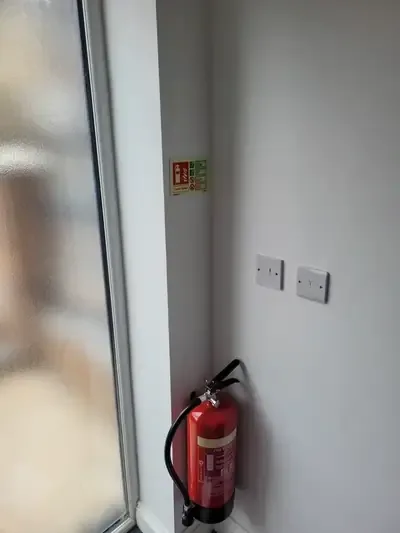
Escape routes and their length, stairs, exit doors and how they open. The alarm and when it was serviced, emergency lighting, signs, extinguishers. Fire doors and what can be seen of the walls and floors that keep a fire in one place. How the building is managed: testing, training, drills and records.
Findings and action plan
Each problem written so a contractor could find it: where it is, what is wrong, what to do, a priority and a target date. A photo where it helps.
The rest
The date of the assessment, the name of the assessor, and when it should next be reviewed. The law asks for the assessment to be reviewed regularly, and straight away after any significant change.
Most reports for small premises run to ten or fifteen pages, with the action plan near the front so it is the first thing you read.
Send the postcode, what the building is used for and how many floors it has. We reply with a written price.